













Need Help?
Whether you are inquiring about product specifications, requesting samples, or seeking customized plate heat exchanger spare parts,our technical team is always ready to provide rapid response and precise support.
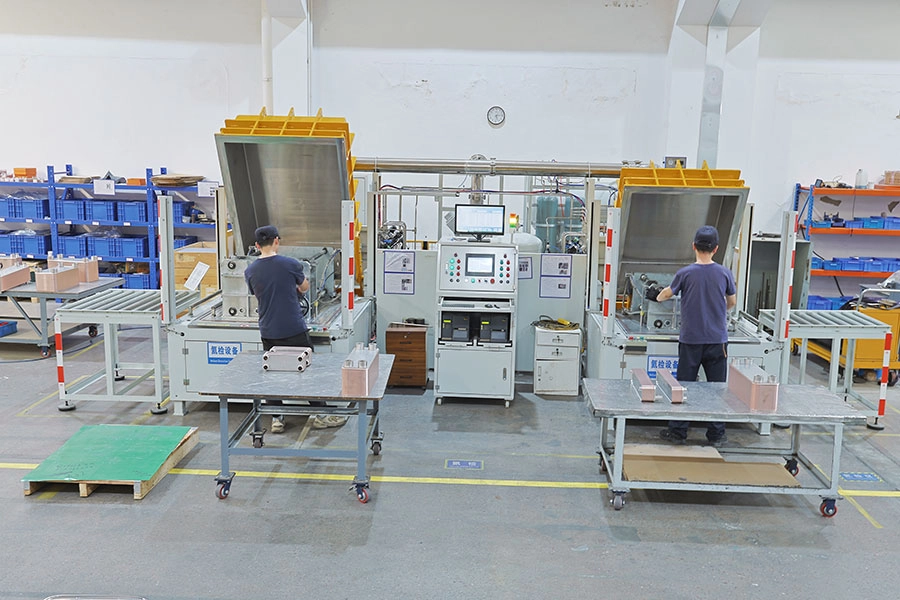
For FLFA's customers, delivering and installing products, systems, or equipment is just the beginning.The FLFA equipment they invested in must perform at a high level for many years to come.FLFA's various maintenance solutions are now on stage. The main content includes:·FLFA maintenance contract - customized according to each customer's situation, from basic service level to comprehensive projects aimed at achieving visible equipment progress.· FLFA maintenance services - consisting of a complete set of advanced testing and repair projects, aimed at ensuring performance and productivity. These services also include traceability, environmental protection and quality control management, as well as finding ways to reduce waste.· FLFA Maintenance Centers - These centers are responsible for cleaning plate heat exchangers and replacing gaskets to ensure that the equipment can continue to operate as it did on the first day of installation. During scheduled production suspensions, FLFA can also provide a complete set of spare plates.· Backup, upgrade, and replacement - By using FLFA spare parts, customers will receive a guarantee of reliability. FLFA also provides comprehensive upgrade and replacement projects for existing equipment.· Training courses - also customized according to specific customer requirements....
No matter what brand of plate heat exchanger is installed in your facility, it can achieve the performance indicated on the OEM nameplate. FLFA Service Center hopes to ensure that you can continue to enjoy the performance indicated on the nameplate. With our fast, economical, and reliable service, your heat exchanger can achieve minimal downtime and receive reliable maintenance.Multi Brand spare parts (plates/gaskets)FLFA has its own heat exchanger plate and gasket factory in China, which can provide well-known brands (brands include: Spirk/SPX, Amperex/APV, Kiel/GEA, Shuripe/SWEP, Sanders/SONDEX, Aipul) Schmidt, Fengkai/FUNKE, Samowave, Vicarb, Donghe Entai/ONGHWA, Ecksen ACCESSEN, MULLER, FISCHER, REHEAT, and others offer nearly a thousand models of detachable plate heat exchanger replacement plates and gaskets, achieving complete replacement with various brands of plate heat exchanger accessories. Plate heat exchanger customers from different countries and industries around the world are using the heat exchanger accessories provided by FLFA and running well.Multi Brand Maintenance Service- OEM valueNo matter what brand of plate heat exchanger is installed in your facility, it can achieve the performance indicated on the OEM nameplate. FLFA Service Center hopes to ensure that you can continue to enjoy the performance indicated on the nameplate. With our fast, economical, and reliable service, your heat exchanger can achieve minimal downtime and receive reliable maintenance.For this purpose, we provide OEM quality spare parts and services for every plate heat exchanger you use, including APV Amperex, SPX Speck, Kelvion Kelvion, GEA Kieer, SWEP Shuripu, Sondex Sanders, Danfoss Danfoss, Vicarb Vikabo, Funke Fengkai, Thermowave, and all FLFA equipment will be eligible for genuine FLFA OEM spare parts and services.For FLFA heat exchangers, you can get more services. We track the original design conditions based on the serial number on the nameplate of the heat exchanger you are using, and confirm that the product information is authorized.For faulty equipment:We will check your current operation to understand the reason for the deterioration, expansion, or rupture of the sealing gasket, and then replace the gasketWe will provide the correct bonding method and replace cracked and lea...
Cleaning method for scaling of plate heat exchangers:1. Selection of cleaning agentsThe current choice of cleaning agent is acid washing, which includes both organic and inorganic acids. Organic acids mainly include oxalic acid, formic acid, etc. Inorganic acids mainly include hydrochloric acid, nitric acid, etc. Based on the analysis of scaling and process, material, and scale composition of the heat exchanger, it is concluded that:1) The heat exchanger has a small flow area and a complex internal structure, making it difficult to discharge the cleaning solution if it settles.2) The material of the heat exchanger is nickel titanium alloy, and hydrochloric acid is used as the cleaning solution, which can easily cause strong corrosion to the plates and shorten the service life of the heat exchanger.Through repeated experiments, it has been found that choosing formic acid as the cleaning solution has a good effect. Adding buffering agents and surfactants to formic acid cleaning solution has a good cleaning effect and can reduce the corrosion of the cleaning solution on the plate. Chemical experiments on scale samples have shown that formic acid can effectively remove scale. Through acid immersion tests, it was found that formic acid can effectively remove scale attached to the plates, and its corrosion effect on the heat exchanger plates is also minimal.2. The basic principle of removing scale1) Dissolving effect: Acid solutions are prone to react with calcium, magnesium, and carbonate scale, generating soluble compounds that dissolve the scale.2) Stripping effect: Acid solution can dissolve oxides on the metal surface, breaking the bond with scale. Thus, the scale adhering to the surface of the metal oxide is peeled off. And it fell off.3) Gas lifting effect: After the acid solution reacts with calcium, magnesium, and carbonate scale, a large amount of carbon dioxide is produced. Carbon dioxide gas is escaping during the process. For scale layers that are difficult to dissolve or dissolve slowly, there is a certain lifting force that causes the scale to detach from the heated surface of the heat exchanger.4) Loosening effect: For scale containing a mixture of silicates and sulfates, residual scale becomes loose due to the dissolution of calcium, magnesium, carbonate, and iron oxid...
Overhaul, cleaning, and reassembly(Example) Model: FM30 · Thermal conductivity area 277 m2Before starting workThe total required time is about 12 hours.The required number of people for this assignment is 6.Please refer to the table below for the number of personnel involved in each task.Essential tools and materials: ratchet wrench, hose, wiping material, brush, grease, steel tape measure (over 2 meters)Before starting the homework, check item ll: 1. Whether the liquid is completely discharged. Are all pressure gauges at 0MPaG. Assignment name Step Homework content Dismantling operation ● Staff: 2 people ● Replacement personnel: 4 people ● Time required: 1 hour and 30 minutes ● Accumulated: 1 hour and 30 minutes 1 Rotate the nut and remove bolts ①⑯⑪⑥. 2 Simultaneously loosen nuts ② and ⑮ 20mm. ※Ensure that the fastening size difference at each bolt position is below 20mm, and adjust while loosening. 3 Simultaneously loosen nuts ⑤ and ⑫ 20mm. 4 Simultaneously loosen nuts ③ and ⑭ 20mm. 5 Simultaneously loosen nuts ④ and ⑬ 20mm. 6 After loosening all the nuts of ② ③ ④ ⑤ ⑫⑬⑭⑮, keep the bolts of ② ⑤ ⑫⑮ and remove the bolts of ③ ④ ⑬⑭. 7 Simultaneously loosen nuts ② and ⑮ 20mm. ※Ensure that the fastening size difference at each bolt position is below 20mm, and adjust while loosening. 8 Simultaneously loosen nuts ⑤ and ⑫ 20mm. 9 Repeat steps 7 and 8 until all bolts are removed. 10 After removing all bolts, move the E-frame to the rear end of the crossbar. ※When attaching the E-plate to the E-frame, be careful to separate it before moving it, and be careful to prevent deformation of the E-plate. Cleaning operation ● Staff: 3 people ● Replacement personnel: 3 people ● Required time: 6 hours ● Accumulated: 7 hours and 30 minutes 1 Move a heat transfer plate to the E rack side. 2 Wash away the dirt attached to both sides of the ...
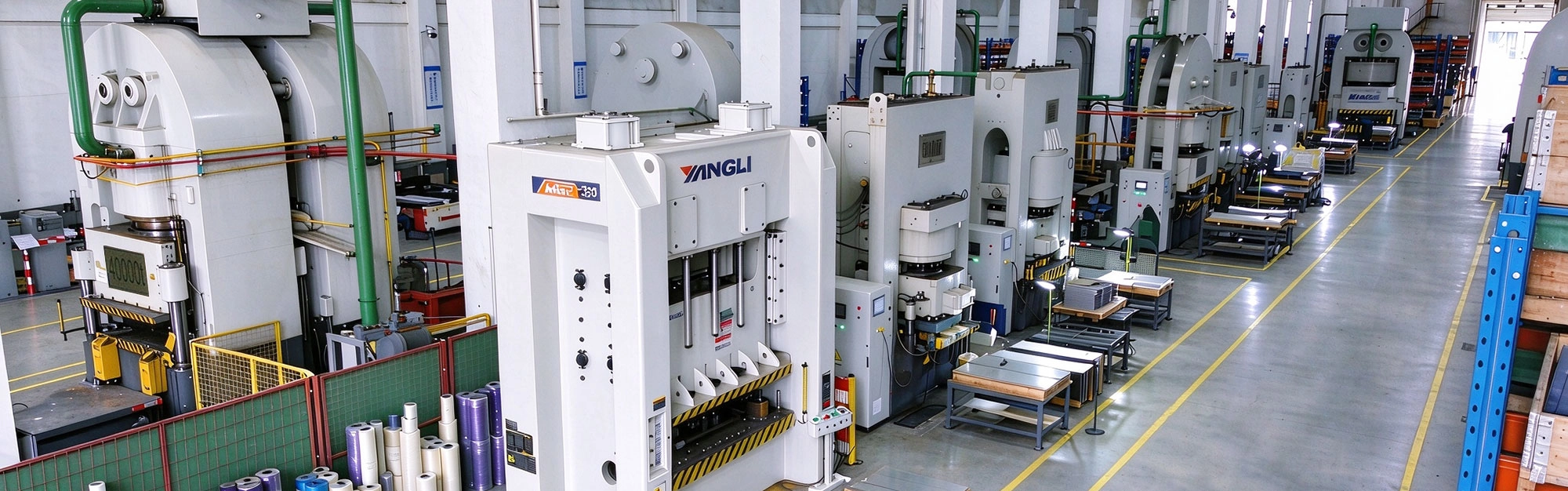
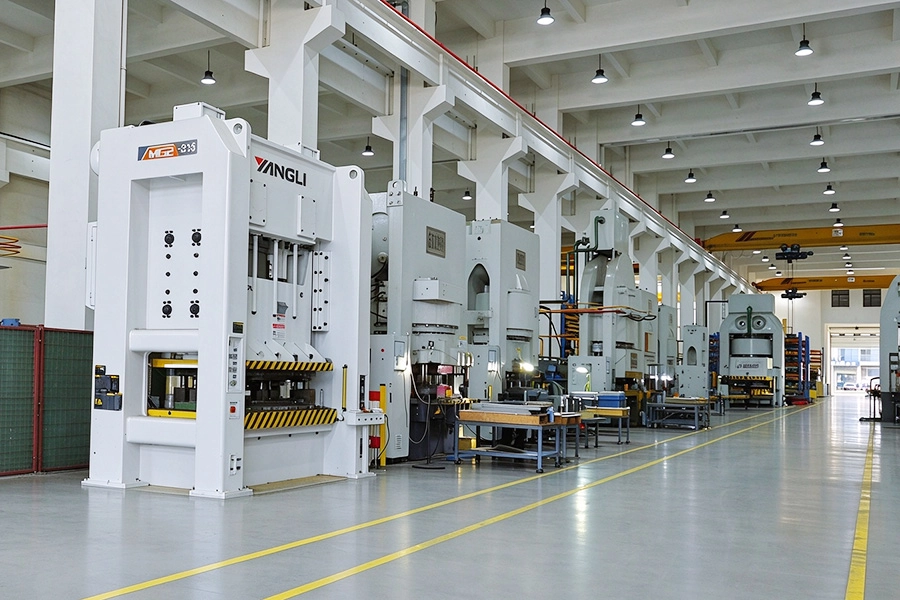
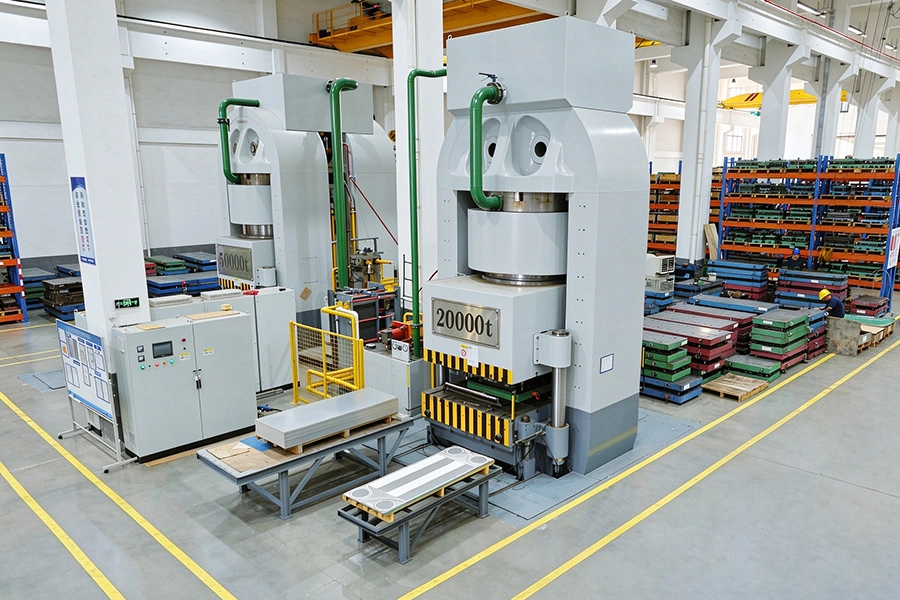
Q&AIn terms of design1. Why do plate heat exchangers have high performance?There are wavy and spherical protrusions on the heat-conducting surface, and the liquid forms vortices to flow rapidly in a turbulent state. This is one of the main reasons for the excellent thermal conductivity of plate heat exchangers.In addition, the rapidly flowing vortex can also prevent the adhesion of water rust on the surface of the heat transfer plate.This type of board is designed to achieve the highest efficiency in heat conduction.The heat transfer coefficient (U value) for water to water is generally 4500~8000W/n3 ℃.2.What are the countermeasures for the blockage and rust caused by seawater?The debris in seawater (seaweed, shellfish, garbage, etc.) may cause blockage of the inlet of the heat conduction part of the plate heat exchanger, so it is necessary to remove these debris. For this, an automatic backwash seawater filter needs to be installed. A perforated metal mesh with a mesh size of 2-3 mm is suitable for the filter screen.To remove rust caused by seawater microorganisms, effective rust removal measures include electrolysis of seawater to produce sodium hypochlorite and circulation of warm water.Manufacturing aspect1.What is the manufacturing method of plate heat exchanger?1) Use precision hydraulic presses of 20000 tons and 40000 tons to perform plastic deformation processing on the heat transfer plate.2) Use a 1000 ton press to perform edge trimming on the outer circumference of the heat transfer plate after plastic deformation processing.3) Install sealing gaskets on the heat-conducting plate after trimming processing.4) Use a precision gas welding cutting machine to cut the frame steel plate (including fixed frame and moving frame) into the specified size, and then use an automatic tool changing CNC machine for mechanical processing.5) Hang the heat transfer plate between the fixed frame and the moving frame, and fix it with bolts according to the specified fastening size.6) Perform crack inspection on the heat transfer plate through air pressure testing.7) After the pressure test is completed, spray painting and precision machining are carried out to complete the product production.2. What are the production specifications for plate heat exchangers?Production and manufacturing...
Basic structureThermal conductive plates are formed by stamping corrosion-resistant stainless steel or titanium. Each board is equipped with a sealing gasket. These boards are suspended from guide rods and bolted together between a fixed frame and a movable frame. The fixed gap between the plates allows the liquid to flow sufficiently. Import and export connectors can be installed on fixed or mobile frames.Flow channelThe heat conduction plate is divided into A plate and B plate, forming a channel between these plates. High temperature liquids and low-temperature liquids flow alternately in opposite directions for heat exchange. In this way, high thermal conductivity was obtained through these thin plates. When the A board is inverted, it can be used as the B board. Therefore, for many series, only one type of board is needed to be used as either A-board or B-board....
If you need assistance in selecting a plate heat exchanger, please fill in your design conditions in the following table and fax it to us. FLFA will provide you with a response. If additional information such as board materials and gasket materials is provided, we will provide you with a more appropriate design. In addition, if you have any questions, please feel free to contact the nearest agent or sales agent of our company. 1. Heat load kW Hot side Cold side 2. Liquid name 3. Import temperature ℃ ℃ 4. Outlet temperature ℃ ℃ 5. Traffic m³/h m³/h 6. Pressure drop MPa or below MPa or below 7. Operating pressure MPaG MPaG 8. Special instructions ...
Whether you are inquiring about product specifications, requesting samples, or seeking customized plate heat exchanger spare parts,our technical team is always ready to provide rapid response and precise support.
Hi~ How can I help you?